
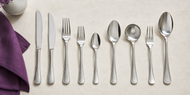
Flatware Explained: What Each Piece Is Used For
Posted by KitchenEssentials.ca on 11th Aug 2026
Flatware Guide
Flatware Explained: What Each Piece Is Used For
From everyday forks and spoons to specialized serving pieces, this guide explains the most common types of flatware and when to use them.
Most of us reach for a fork, knife and spoon without giving them much thought. But when you are choosing a new flatware set, replacing missing pieces or preparing a table for guests, the number of available utensils can quickly become confusing.
Flatware does not need to be complicated. Each piece is designed for a particular task, although many can be used in more than one way. Here is a practical guide to the utensils you are most likely to encounter.
The five essential pieces in a flatware set
A traditional five-piece place setting includes a dinner fork, salad fork, dinner knife, tablespoon and teaspoon. This combination covers most everyday meals and is the foundation of many boxed flatware sets.
Dinner fork
The dinner fork is the largest standard fork in a place setting. It is used for the main course and works well for meat, pasta, vegetables and most everyday dishes. If only one fork is provided at an informal meal, it will usually be a dinner fork.
Salad fork
A salad fork is slightly shorter and narrower than a dinner fork. It is intended for salads, appetizers and lighter courses. At a formal place setting, it normally sits to the left of the dinner fork because utensils are arranged in the order in which they will be used, from the outside inward.
Dinner knife
The dinner knife has a moderately sharp or gently serrated edge for cutting cooked vegetables, casseroles and tender foods. It is also used to move food onto the fork. When setting the table, place it to the right of the plate with the blade facing inward.
Tablespoon
The tablespoon is larger than a teaspoon and is commonly used for soups, cereal and foods served in a bowl. Depending on the flatware pattern, it may also be described as a place spoon.
Teaspoon
The teaspoon is the most versatile small spoon. It can be used for tea and coffee, desserts, yogurt, sauces and smaller servings. It is generally included in every place setting.
Specialty forks
Dessert fork
A dessert fork is smaller than a dinner fork and is used for cake, pie, pastries and fruit. Some designs have a wider outer tine that helps cut soft desserts without requiring a knife.
Oyster or seafood fork
This small, narrow fork is designed for shellfish and seafood appetizers. It is usually the only fork placed on the right-hand side of a formal place setting.
Serving fork
A serving fork is larger than a dinner fork and is used to transfer sliced meat, vegetables, salads and other shared foods from a serving dish. It is often paired with a serving spoon.
Specialty knives
Steak knife
A steak knife has a sharper edge than a standard dinner knife and may have a straight or serrated blade. It is intended for steaks, chops and other foods that require more cutting power.
Butter knife
A butter knife has a rounded tip and a dull spreading edge. It may be placed on a bread plate and is used for spreading butter, soft cheese and other spreads.
Cheese knife
Cheese knives come in several shapes. A narrow or perforated blade helps reduce sticking when cutting soft cheese, while a stronger pointed blade can portion firm varieties and lift pieces for serving.
Specialty spoons
Soup spoon
A soup spoon has a wider, rounder bowl than a tablespoon. Its shape makes it easier to enjoy broth-based soups and bisques. An oval soup spoon may be used for heartier soups containing larger ingredients.
Dessert spoon
A dessert spoon falls between a teaspoon and tablespoon in size. It is suitable for puddings, custards, fruit, ice cream and other spoonable desserts.
Soda spoon
Also called an iced-tea spoon, a soda spoon has a teaspoon-sized bowl and an extra-long handle. It is designed for tall glasses, milkshakes, floats, iced beverages and layered desserts.
Serving spoon
A serving spoon has a large bowl for portioning vegetables, rice, potatoes, casseroles and side dishes. A slotted version allows excess liquid or sauce to drain before the food reaches the plate.
How to arrange flatware correctly
For most everyday meals, place the fork to the left of the plate and the knife and spoon to the right. The knife blade should face the plate. If several courses are being served, position the utensils in the order they will be used, working from the outside toward the plate.
- Left side: salad fork on the outside, dinner fork closest to the plate.
- Right side: dinner knife closest to the plate, followed by the spoon.
- Above the plate: dessert fork or spoon may be placed horizontally.
- Bread plate: a butter knife may rest horizontally across the plate.
How many flatware settings should you buy?
For everyday use, choose enough settings for everyone in your household plus a few extras. A set for eight is a practical starting point for many homes because it accommodates family meals, visitors and the occasional missing utensil. Those who entertain regularly may prefer 12 settings.
Before purchasing, also check whether matching individual pieces and serving utensils are available. An open-stock collection makes it easier to replace lost pieces or expand your set later.
Choosing flatware for everyday use
Good flatware should feel balanced and comfortable in your hand. Consider the weight, handle shape, finish and size—not just the appearance. Stainless steel is a popular everyday choice because it is durable, easy to maintain and suitable for both casual and formal tables.
Whether you need a simple five-piece place setting or a larger collection with specialty and serving pieces, understanding what each utensil does makes choosing the right flatware much easier.
Find Flatware for Every Table
Explore flatware sets, individual utensils and serving pieces for everyday meals and special occasions.
Shop Flatware