
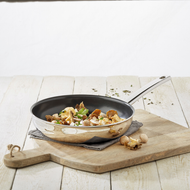
Stainless Steel vs Nonstick vs Carbon Steel Fry Pans
Posted by KitchenEssentials.ca on 2nd Mar 2026
Stainless Steel vs Nonstick vs Carbon Steel Fry Pans
Which One Belongs in Your Kitchen?
If you cook regularly, you’ve probably wondered which fry pan is “the best.” The truth is — there isn’t one perfect pan. Stainless steel, nonstick, and carbon steel each serve a different purpose. The right choice depends on how you cook and what you cook most often.
Below is a clear, practical comparison to help you decide.
Quick Comparison Grid
| Pan Type | Major Advantages (+) | Main Drawbacks (–) | Best For | Less Ideal For |
|---|---|---|---|---|
| Stainless Steel | + Exceptional browning and searing + Perfect for pan sauces + Extremely durable |
– Food can stick if heat control is incorrect – Slight learning curve |
Steak, chicken, pork chops Sautéing vegetables Deglazing sauces |
Very delicate foods like soft eggs Flaky fish |
| Nonstick | + Easiest food release + Quick cleanup + Requires less oil |
– Coating wears over time – Not suited for very high heat |
Eggs Pancakes Delicate fish, tofu |
Hard searing Very high heat cooking |
| Carbon Steel | + Excellent high-heat performance + Develops natural nonstick surface when seasoned + Lighter than cast iron |
– Requires seasoning and maintenance – Can rust if not dried properly |
Stir-fry Searing Restaurant-style cooking |
Long acidic cooking when newly seasoned |
Stainless Steel Fry Pans
Stainless steel is the most versatile and professional option. It excels at high-heat cooking and produces beautiful browning — the kind that creates flavor-packed fond at the bottom of the pan. That fond becomes incredible pan sauces when deglazed with wine, broth, or citrus.
Because stainless steel is uncoated, it’s extremely durable. You can use metal utensils, scrub it thoroughly, and rely on it for years without worrying about surface wear.
The downside? Food can stick if the pan isn’t preheated properly or if you try to move ingredients too soon. Once you understand heat control and oil timing, stainless becomes incredibly reliable.
Best tip: If you only own one pan, stainless steel is usually the safest long-term investment.
Nonstick Fry Pans
Nonstick pans are designed for convenience. They’re ideal for foods that are delicate or prone to sticking — especially eggs, pancakes, and fish.
They require less oil and clean up quickly, making them perfect for busy weeknights or quick breakfasts.
However, nonstick coatings are not built for intense heat. Very high temperatures can reduce the lifespan of the coating, and over time, even well-cared-for nonstick pans will eventually lose performance.
Best tip: Think of nonstick as a specialty pan you replace occasionally — not your forever pan.
Carbon Steel Fry Pans
Carbon steel sits between stainless steel and cast iron in performance. It heats quickly, handles high temperatures beautifully, and develops a natural nonstick surface through seasoning.
When properly seasoned, carbon steel becomes increasingly slick over time. Many professional kitchens use carbon steel because it can sear aggressively yet still handle delicate cooking once broken in.
The tradeoff is maintenance. Carbon steel must be seasoned and dried properly to prevent rust. Acidic foods can strip seasoning until the surface is well developed.
Best tip: If you want one pan that can sear aggressively and still cook eggs once broken in, carbon steel is an excellent choice.
Which Pan Should You Choose?
- Love cooking steak and making sauces? Choose stainless steel.
- Cook eggs almost daily? Add a nonstick pan.
- Want restaurant-style searing with long-term performance? Go with carbon steel.
- Want maximum versatility? Own stainless steel as your foundation and add one specialty pan based on your cooking style.
The Bottom Line
There’s no single “best” fry pan — only the best tool for your cooking habits.
Stainless steel delivers power and versatility.
Nonstick delivers convenience and ease.
Carbon steel delivers performance and longevity with proper care.
Many experienced home cooks eventually own more than one because each material does something exceptionally well. Choosing the right combination will make cooking easier, more enjoyable, and more consistent.
If you’re building your cookware collection, start with how you cook most — and build from there.