Choosing a Nakiri: A Vegetable Knife for Everyday Cooking
20th Nov 2026
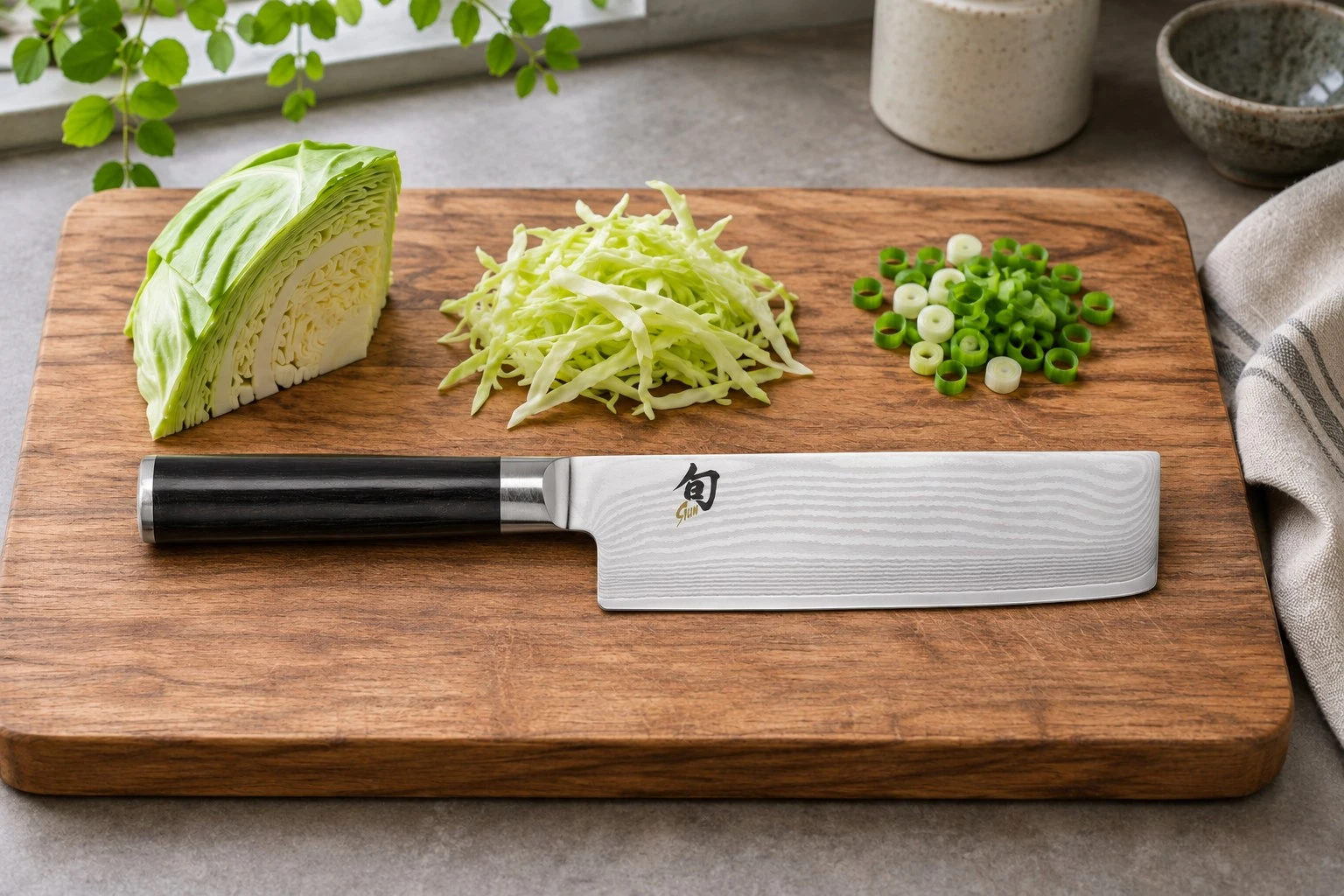
A generous pile of sliced cabbage, neatly diced onions and a handful of chopped herbs can be the beginning of several good meals. When vegetables take up much of your preparation time, a nakiri is worth a closer look.
This Japanese-style vegetable knife has a broad, rectangular blade and a relatively straight cutting edge. Its shape suits controlled slicing and chopping, especially when you want consistent pieces that will cook together.
Start with the vegetables you prepare most
Think about an ordinary week in your kitchen. If you regularly slice leafy greens, dice onions or prepare vegetables for soups and stir-fries, a nakiri can become a useful part of that routine.
Its flatter edge works well with a gentle forward-and-down cutting motion. Keep the movement controlled and let the edge slice through the food.
For cabbage pancakes, the practical benefit is consistency. Short, thin shreds mix more evenly into the batter and make the pancakes easier to shape and turn.
Look at blade length and board space together
A longer blade gives you more cutting length, but it also needs room to work. Choose a knife you can guide comfortably and a board large enough to hold both the ingredient and the prepared pieces.
For cabbage, begin with a manageable wedge resting on a stable, flat cut surface. Remove the dense core with a suitable sturdy knife before moving to fine slicing.
Browse the vegetable-knife collection with your usual ingredients and available workspace in mind. Shop nakiri and vegetable knives
Compare the handle as carefully as the blade
The blade’s appearance may catch your attention first, but the handle is what you will hold through every slice.
The Shun Classic 6.5-inch Nakiri pairs a VG-MAX cutting core with an ebony-finish PakkaWood handle. It offers the familiar styling of the Classic collection in a dedicated vegetable knife. View Shun Classic Nakiri
The Shun Shiranami 6.5-inch Nakiri provides another option, with a Dual Core blade made from alternating VG10 and VG2 steel layers and a jute micarta handle. Compare the handle shape, materials and overall feel alongside the blade length. View Shun Shiranami Nakiri
Give the edge a suitable cutting surface
A stable cutting board helps you work comfortably and protects the edge during repeated contact.
Shun recommends medium-soft wooden boards, including hinoki, for its knives. Place a damp cloth beneath the board if it needs help staying still, and follow the board’s care instructions after use. Shun Medium Hinoki Cutting Board · Shun care guidance
Use a light hand and protect the blade
Keep your guiding fingertips curled away from the cutting edge and work at a comfortable pace. If the blade catches, stop and lift it straight out. Twisting it sideways puts stress on the edge.
Follow the manufacturer’s guidance for hard ingredients. Shun advises against cutting bones, joints or frozen foods with its knives. Handwash the knife after preparation, dry it promptly and store it with the edge protected. Shun use and care
Put it to work on a complete meal
Cabbage pancakes turn a modest amount of finely sliced vegetables into a satisfying lunch. Once the cabbage and green onions are prepared, the remaining work is mixing a simple batter and cooking small rounds in a frying pan.
That is a useful way to judge any specialist knife. Picture the meals you would prepare with it, the cuts you make repeatedly and how comfortably it fits into your kitchen.