
Stainless Steel Cookware Care Guide
Posted by KitchenEssentials.ca on 25th Apr 2026
Cookware Care Guide
How to Care for Stainless Steel Cookware: Cleaning, Preheating & Preventing Warping
Stainless steel cookware is one of the most durable and versatile choices for Canadian home cooks. With the right care, proper heat control, and a few simple cleaning habits, your stainless steel pots and pans can perform beautifully for years.
Stainless steel cookware is valued for its durability, non-reactive cooking surface, excellent browning ability, and long-term performance. It is ideal for searing, sautéing, boiling, simmering, making sauces, and everyday cooking.
However, many common stainless steel cookware issues — including food sticking, rainbow stains, white spots, burnt residue, and even warping — are usually caused by heat control, minerals, cleaning habits, or thermal shock. The good news is that most of these problems are easy to prevent.
In This Guide
- How to preheat stainless steel properly
- Why food sticks to stainless steel pans
- How to clean stainless steel cookware
- How to remove white spots, rainbow stains, and discolouration
- How to prevent stainless steel cookware from warping
- Using stainless steel cookware on induction
- What not to do with stainless steel cookware
1. How to Preheat Stainless Steel Cookware Properly
Proper preheating is one of the most important steps when cooking with stainless steel. Unlike non-stick cookware, stainless steel does not have a coated surface to prevent sticking. Instead, it relies on heat, oil, and timing.
Start with medium heat and allow the pan to warm gradually. Once the pan is hot, add your oil or butter, then add the food. When the temperature is right, food will usually release more easily after it begins to brown.
2. Why Food Sticks to Stainless Steel Pans
Food often sticks to stainless steel when the pan is not hot enough, the oil is added too early, or the food is moved before it has had time to sear. Proteins, especially meat, chicken, fish, and eggs, can bond to the metal surface if the temperature is too low.
Once the surface is properly heated and the food begins to brown, it will usually release naturally. This is why stainless steel is excellent for creating fond — the browned bits left in the pan that help build flavour in sauces and pan reductions.
How to Reduce Sticking
- Preheat the pan gradually over medium heat.
- Add oil after the pan is heated.
- Pat meat and fish dry before cooking.
- Let food brown before trying to move it.
- Avoid overcrowding the pan, which lowers the temperature.
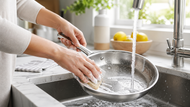
3. How to Clean Stainless Steel Cookware After Cooking
Stainless steel cookware is easy to clean once you understand the right method. The key is to let the pan cool slightly, loosen residue with warm water, and avoid harsh cleaning habits that can damage the finish.
Basic Cleaning Method
- Let the pan cool before washing.
- Add warm water to loosen food residue.
- Wash with dish soap and a non-abrasive sponge.
- For stuck-on food, simmer water in the pan for a few minutes.
- Dry immediately to help prevent water spots.
For tougher residue, a paste made with baking soda and water can help lift stains without being overly harsh. For polished stainless steel cookware, avoid aggressive scrubbing on the exterior if you want to preserve the shine.
4. How to Remove White Spots, Rainbow Stains & Discolouration
Stainless steel can develop marks over time, but most are cosmetic and can be cleaned. White spots, rainbow stains, and brown residue are common and usually do not mean the cookware is damaged.
| Issue | Common Cause | How to Clean It |
|---|---|---|
| White spots | Minerals from water or salt added too early | Use vinegar and water, then rinse and dry |
| Rainbow stains | Heat tint or mineral reaction | Wipe with diluted vinegar or stainless steel cleaner |
| Brown residue | Cooked-on oil or food residue | Use baking soda paste or simmer water to loosen |
| Burnt food | Too much heat or food left too long | Simmer water, then clean with baking soda or cleaner |
To help prevent white spots, add salt only after water has come to a boil. Salt sitting on the bottom of a cold stainless steel pot can contribute to pitting or mineral marks over time.
5. How to Prevent Stainless Steel Cookware from Warping
Warping happens when the base of a pan is no longer perfectly flat. On gas ranges, minor warping may be less noticeable, but on glass, ceramic, and induction cooktops, a warped pan can rock, spin, or make uneven contact with the cooking surface.
The main cause of warping is thermal stress. Stainless steel cookware expands as it heats and contracts as it cools. If the temperature changes too quickly, or if the heat is concentrated in one area, the metal can move unevenly.
Common Causes of Warping
- Putting a hot pan under cold water.
- Heating an empty pan too aggressively.
- Using high heat immediately on a cold pan.
- Using a burner that is much smaller than the pan base.
- Using boost mode on induction for general preheating.
- Overheating thin or lightweight cookware.
How to Help Prevent Warping
- Let cookware cool before washing.
- Preheat gradually over medium heat.
- Match the burner size to the base of the pan.
- Avoid thermal shock from sudden hot-to-cold changes.
- Use medium or medium-high heat for most stainless steel cooking.
- Choose quality cookware with solid construction and even heat distribution.
Why Better Cookware Helps
Premium stainless steel cookware often uses multi-layer construction, such as aluminum or copper cores, to help distribute heat more evenly. Better heat distribution can reduce hot spots and improve cooking performance, especially on powerful cooktops.
6. Stainless Steel Cookware on Induction Cooktops
Induction cooking is fast, efficient, and precise, but it can heat cookware much more quickly than gas or electric. Because induction transfers energy directly into the magnetic base of the pan, stainless steel cookware can become hot faster than expected.
This is why it is especially important to start with a lower setting when preheating stainless steel on induction. High-power settings and boost modes are best reserved for boiling water, not for preheating an empty fry pan.
Induction Care Tips
- Start lower than you would on gas or electric.
- Avoid using maximum power to preheat an empty pan.
- Use cookware with a flat, induction-compatible base.
- Match the pan size to the induction element whenever possible.
- Choose heavier-gauge cookware for better stability and performance.
7. What Not to Do with Stainless Steel Cookware
Stainless steel is very durable, but a few habits can shorten its lifespan or affect its appearance.
Avoid Thermal Shock
Do not rinse a hot pan under cold water. Let it cool first.
Avoid Constant High Heat
High heat is rarely needed with quality stainless steel cookware.
Avoid Salt in Cold Water
Add salt after water is boiling to help reduce mineral marks and pitting.
Avoid Harsh Chemicals
Bleach and aggressive cleaners can damage stainless steel finishes.
8. When to Use Stainless Steel Instead of Non-Stick
Stainless steel cookware is best for searing, browning, sautéing, boiling, simmering, and building flavour. It is the better choice when you want higher heat tolerance, durability, and a surface that can create fond for sauces.
Non-stick cookware is still useful for delicate foods like eggs, pancakes, and fragile fish. However, stainless steel is the better long-term choice for everyday durability and high-performance cooking.
Final Buying Advice
The best stainless steel cookware combines durability, even heat distribution, comfortable handling, and a flat, stable base. For best results, look for cookware with quality construction, an induction-compatible base if needed, and the right shape for the way you cook.
With proper care, stainless steel cookware can be one of the longest-lasting and most reliable investments in your kitchen.
Shop Premium Stainless Steel Cookware in Canada
Explore stainless steel cookware, fry pans, saucepans, sauté pans, and cookware sets from trusted brands at KitchenEssentials.ca.
Shop Cookware